❋ ABOUT
Next Edition | July 2026
THE ORIGINAL RCA MAGAZINE
✷
David Hockney
✷
Ridley Scott
✷
Lucio Fontana
✷
Peter Blake
✷
R. B. Kitaj
✷
Patrick Caulfield
✷
Derek Boshier
✷
Gustav Metzger
✷
Cedric Price
✷
Alison and Peter Smithson
✷
Alan Fletcher
✷
Ken Garland
✷
Reyner Banham
✷
Richard Smith
✷
Peter Phillips
✷
Robyn Denny
✷
Ryan Gander
✷
David Gentleman
✷
Len Deighton
✷
Raymond Hawkey
✷ David Hockney ✷ Ridley Scott ✷ Lucio Fontana ✷ Peter Blake ✷ R. B. Kitaj ✷ Patrick Caulfield ✷ Derek Boshier ✷ Gustav Metzger ✷ Cedric Price ✷ Alison and Peter Smithson ✷ Alan Fletcher ✷ Ken Garland ✷ Reyner Banham ✷ Richard Smith ✷ Peter Phillips ✷ Robyn Denny ✷ Ryan Gander ✷ David Gentleman ✷ Len Deighton ✷ Raymond Hawkey
Our History
ARK is a student-led publication at the Royal College of Art, emerging as a space where art, design, writing, image-making and experimental practice could meet. Across its many forms, it has recorded the changing energies of the College and the wider cultural worlds surrounding it.
Its pages have carried contributions from students, artists, designers, architects and thinkers connected to the RCA. Some appeared as emerging voices; others would go on to shape British and international visual culture.
Through each iteration, ARK has operated as more than a magazine: it has been a platform, an archive and a site of creative exchange. Its history reflects the force of student-led publishing as a means of testing ideas before they enter wider circulation.
Today, ARK returns as a living publication shaped by collaboration, curiosity and critical ambition. It continues its historic lineage while opening a new space for contemporary practice, dialogue and experimentation.
-
First established in 1950 by students at the Royal College of Art, ARK was a student-led magazine dedicated to style, design, art, image-making and cultural criticism. Published between 1950 and 1978, it became one of the most distinctive magazines to emerge from the RCA, reflecting the College’s unique position as both an art school and a design school.
From its earliest issues, ARK acted as a space for experimentation and collaboration across disciplines. It brought together painters, designers, architects, writers and critics at a time when British visual culture was changing rapidly. The magazine developed alongside major shifts in fashion, film, television, advertising, newspapers and publishing, and its pages captured the energy of post-war cultural transformation.
-
The RCA itself was undergoing significant change during this period. Although government bodies often emphasised the College’s role in training designers for industry rather than fine artists, ARK demonstrated the continuing importance of artistic experimentation at the institution. The magazine gave visible form to the cross-pollination between design students and painters, particularly during the rise of Pop Art in the 1950s and 1960s, when the RCA was home to figures such as Peter Blake, David Hockney, Pauline Boty, Derek Boshier, Joe Tilson, Allen Jones, R.B. Kitaj and Patrick Caulfield.
Across its 54 issues, ARK drew contributions from an extraordinary range of creative figures. These included Lucio Fontana, Ralph Rumney, Alison and Peter Smithson, Toni del Renzio, Reyner Banham, Cedric Price and Bruce Lacey. Its covers and visual identity also reflected the magazine’s ambition, with designs by figures including Len Deighton and Alan Fletcher. The magazine’s openness to different forms, voices and visual strategies helped establish it as an influential presence in British cultural life.ARK was especially significant during its late 1950s to mid-1960s heyday. Design critic Rick Poynor described it as a vivid historical document that recorded, narrated and evoked its moment with “energy, eloquence and insight.” He noted that while other British magazines of the period shared some of ARK’s interests, few could match its visual invention, eclecticism and capacity for surprise.
In its newest iteration, ARK removes the hierarchies found within the art world, offering an opportunity for contributors to feature on a level playing field. -
Laura Dzelzytė - Executive Editor
Giorgia De Stefano - Editor of (Post)Human issue
Oriana Anthony - Deputy Editor
Creative Direction / Graphic Design
Matilde Battisti
Joe Twm
Contributing Editors
Pallavi Devkota
Harshita Agarwal
Josef Michalski -
The growing list of contributors to ARK includes but not limited to:
Alan Bartram — Graphic designer
Alan Fletcher — Graphic designer
Alison and Peter Smithson — Architects
Anthony Froshaug — Typographer / graphic designer
Bill James — Editor
Brian Haynes — Graphic designer / art director
Cedric Price — Architect
David Collins — Graphic designer / art director
David Gentleman — Artist / illustrator / designer
David Hockney — Artist
David Pye — Designer / crafts theorist
Denis Postle — Graphic designer / art director
Derek Boshier — Artist
Douglas Merritt — Graphic designer / art director
Emilija Pliaukštaitė — Editor / designer
Fine-Artz Associates — Artist collective
Geoff Reeve — Photographer / filmmaker
Gordon Moore — Graphic designer
Gustav Metzger — Artist
Herbert Spencer — Typographer / graphic designer
Ise Sharp — Editor
Jack Stafford — Editor / founder
John Halas — Animator / filmmaker
John Moynihan — Artist / writer
June Fraser — Graphic designer / art director
Keith Branscombe — Photographer
Ken Baynes — Design theorist / editor
Ken Garland — Graphic designer
Laura Dzelzytė — Executive editor
Len Deighton — Writer / designer
Lucio Fontana — Artist
Michael Myers — Editor / writer
Mike Kidd — Graphic designer
Misha Black — Designer / architect
Patrick Caulfield — Artist
Peter Blake — Artist
Peter Phillips — Artist
R. B. Kitaj — Artist
Ralph Rumney — Artist
Raymond Hawkey — Graphic designer
Reyner Banham — Architecture and design critic
Richard Smith — Artist
Ridley Scott — Filmmaker / designer
Robyn Denny — Artist
Roger Coleman — Editor
Roy Giles — Designer / contributor
Ryan Gander — Artist
Shashi Rawal — Art director / designer
Stephen Cohn — Editor
Stephen Hiett — Photographer / designer
Terry Green — Graphic designer / art director
Toni del Renzio — Artist / writer
OUR TIMELINE
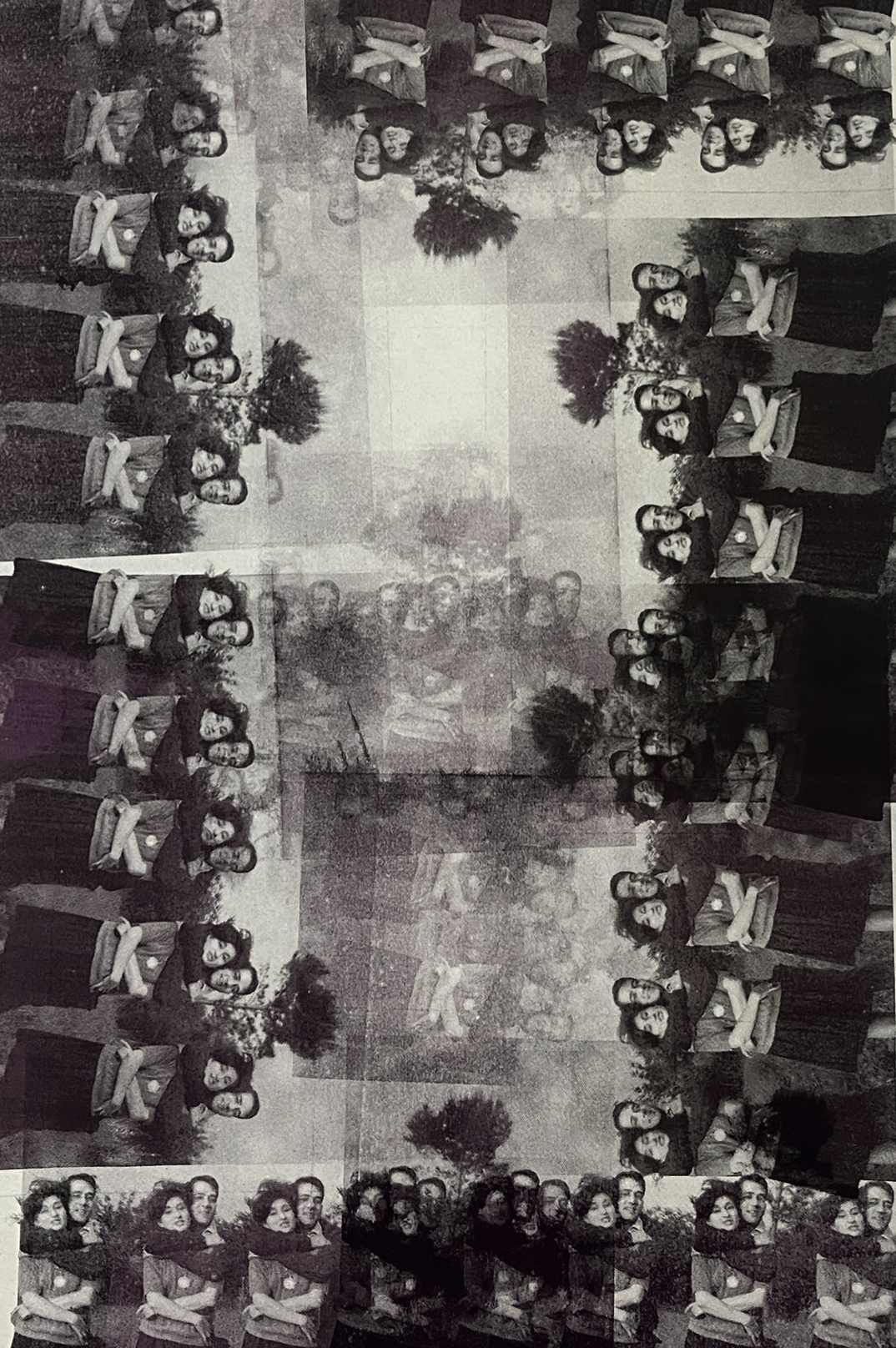
Founded at the Royal College of Art in 1950, ARK occupies a singular position within the history of British art-school publishing. Across its historic run and contemporary revival, the magazine has gathered artists, designers, writers and cultural practitioners into a printed record of experimentation, exchange and institutional memory.
This chronology brings together ARK’s recent editions with its original sequence, tracing the publication from the present day back to its first issue. Each entry marks a point in the magazine’s evolving life: a material document of its time, a record of the RCA community, and a collectible object within a wider history of art, design and editorial culture.
ARK Magazine 1950 – Now
-
No. 57 — 2026 — (Post)Human
No. 56 — 2026 — Repetition
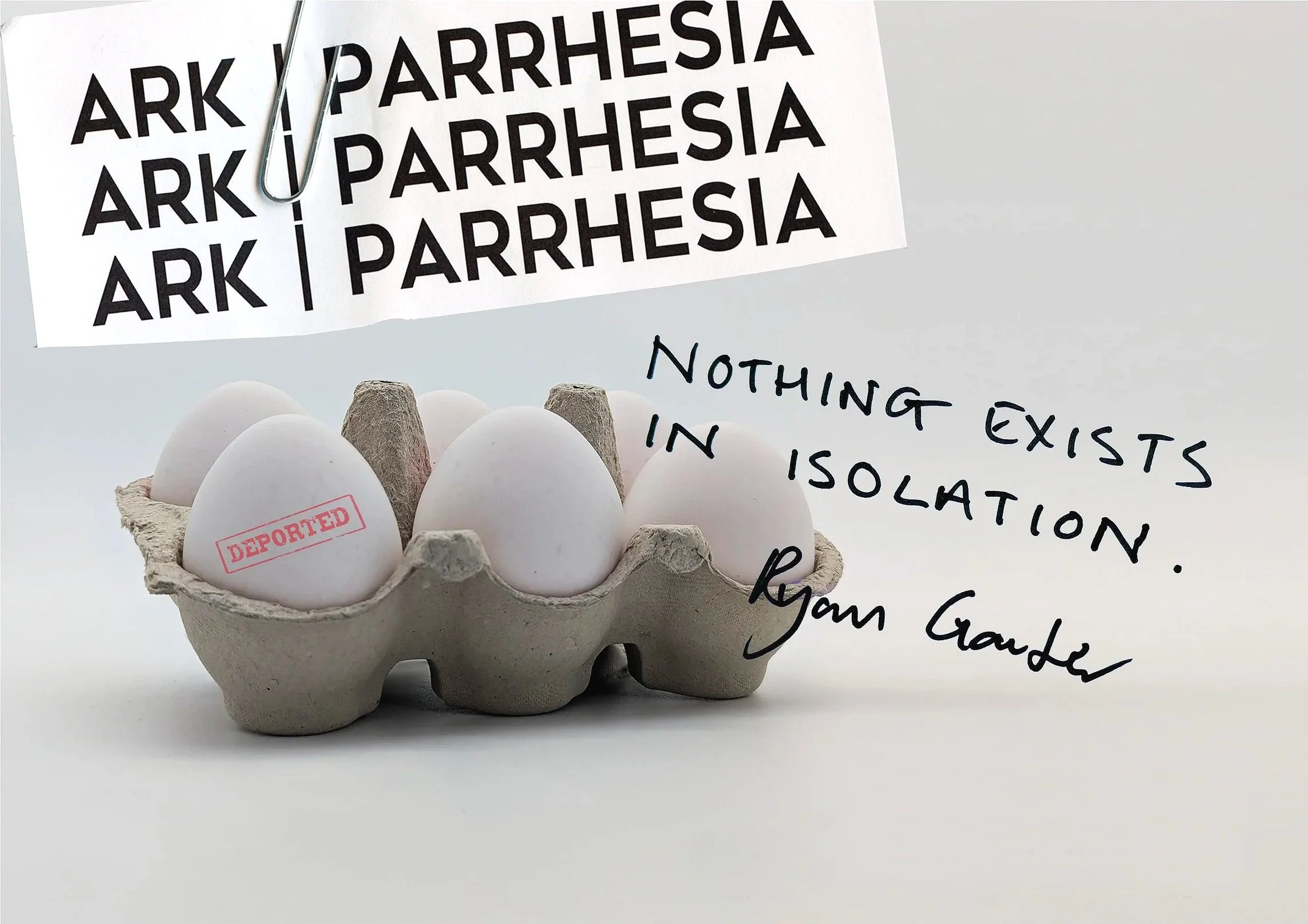
No. 55 — 2025 — Parrhesia -
No. 54 — 1978
No. 53 — December 1976
No. 52 — 1976 / probably Spring 1976
No. 51 — Summer 1973
No. 50 — Spring 1972
No. 49 — 1971
No. 48 — 1971 -
No. 47 — c. 1970–1971
No. 46 — Spring 1970
No. 45 — c. 1969
No. 44 — c. 1968–1969
No. 43 — c. 1968
No. 42 — 1968
No. 41 — 1967
No. 40 — Summer 1966
No. 39 — Winter 1965 / 1965–66
No. 38 — Summer 1965
No. 37 — Winter 1964–65
No. 36 — Summer 1964
No. 35 — Spring 1964
No. 34 — Summer 1963
No. 33 — Autumn 1962
No. 32 — Summer 1962
No. 31 — 1962
No. 30 — Winter 1961–62
No. 29 — Summer 1961
No. 28 — Autumn 1961
No. 27 — Winter 1960–61
No. 26 — 1960
No. 25 — 1960
No. 24 — Autumn 1959
No. 23 — 1958
No. 22 — 1958
No. 21 — Spring 1958
No. 20 — Summer 1957
No. 19 — 1957 / probably Spring 1957
No. 18 — Autumn / November 1956
No. 17 — Summer 1956
No. 16 — 1956 / probably Spring 1956
No. 15 — 1955–1956
No. 14 — 1955
No. 13 — Spring 1955
No. 12 — Autumn / Winter 1954
No. 11 — 1954
No. 10 — 1954
No. 9 — 1953–1954
No. 8 — July 1953
No. 7 — March 1953
No. 6 — November 1952
No. 5 — Summer 1952
No. 4 — February 1952
No. 3 — 1951
No. 2 — 1950 / 1951
No. 1 — October 1950