
Parrhesia — Monica Perez
Monica Perez – Transatlantic Totems wool and clay sculpture
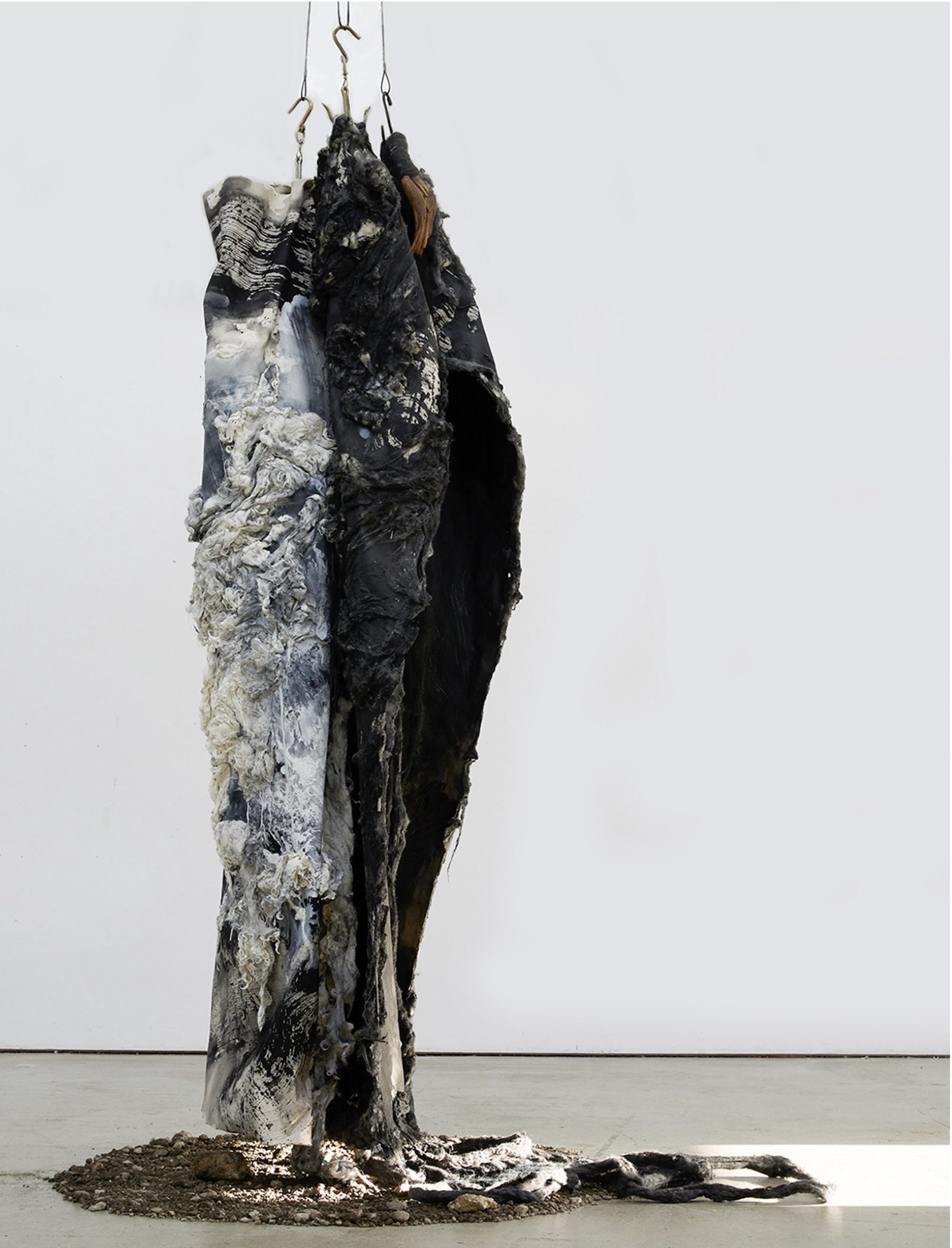
Monica Perez, Transatlantic Totems. Hanging sculpture in wool, fabric and clay, evoking flayed hides and scorched landscapes shaped by the transatlantic wool trade.
“Transatlantic Totems” examines the relationship between England and South America during the British Empire’s expansion, focusing on colonies established to exploit resources and cheap labor.
In Uruguay, wool became a primary resource, contributing to the genocide of Indigenous people. For years, wool gained at the cost of life and liberty crossed the Atlantic into European soil, with consumers unaware of the accompanying crimes. This resonates with Dussel’s critique of Eurocentric narratives that often erase the agency and voices of those on the periphery.¹
The choice of wool, a material deeply intertwined with the transatlantic trade and colonial economies, is a reminder of the historical injustices embedded within global commodity chains. It serves as a reminder of the genocidal amnesia of the Charrúas by the Uruguayan government. At the same time, allied European powers allowed the Pampas, a vast, fertile grassland, to be cleared for grazing, erasing Indigenous identities.
Enrique Dussel, “Eurocentrism and Modernity (Introduction to the Frankfurt Lectures),” boundary 2, 20, no. 3 (1993): 65–76. Dussel argues that modernity is not solely a European phenomenon but was constituted in relation to a non-European alterity — a perspective that challenges traditional historical narratives.
Ibid. Dussel highlights how the “discovery” and subsequent exploitation of the Americas were central to the development of European modernity, a process deeply intertwined with the extraction of resources like wool and the establishment of colonial economies.