
✷ By Stuart Lee ✷ 27/05/2025 ✷ London ✷ For ARK Parrhesia ✷
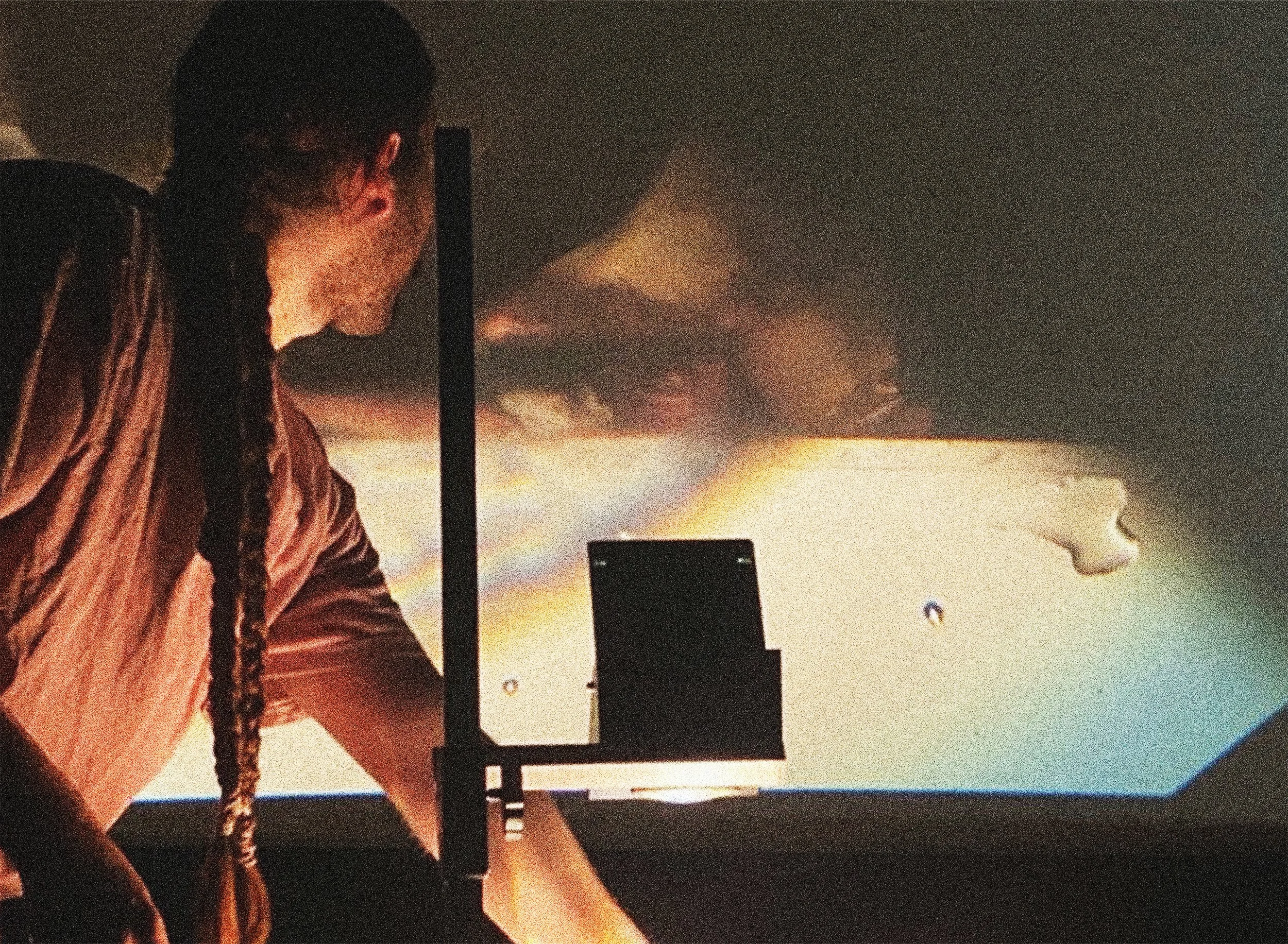
Stuart Lee, Fig 1. Still of “The Felled Tree Performance” (Multi Media Performance). 2025.
A Queered Epistemology
There is an emergency in the gender sciences!
Standing in a shallow stream, bracing a fallen tree upright. The gesture does not transcend; it holds. Dualism is not overcome but dwelled within, and here, the neologism Emergent-cy becomes not only vital but urgent. Unlike ‘emergency’, which implies systemic resolution, arrested in an event, Emergent-cy names unresolved conditions as grounds on which to explore the in-between spaces of scientific intervention. Flow states become a durational sitewhich transform our actions. We no longer enact the same empathy of these sciences — we reject its refusal to see nuance. On this fragile terrain, we hold, we co-exist, and the gesture shifts from the exceptional to relational. In my Felled Tree Performance, this logic completes its passage. Crisis is neither symbolic nor aestheticized; it becomes ecological and inhabited. The tree and I co-perform an ongoing labour of care. The gesture becomes an ethics, not a spectacle. SL.
There is an emergency in gender sciences! In 2019, a paper published in Science by Andrea Ganna et al. provided insight into the genetic architecture of same-sex sexual behaviours. In an age where some of the most fundamental questions of existence, from the quantum level to the cosmological, are actively investigated, it seems the subject of the ‘nonheterosexual’ still requires an answer as to why queerness is “caused.”
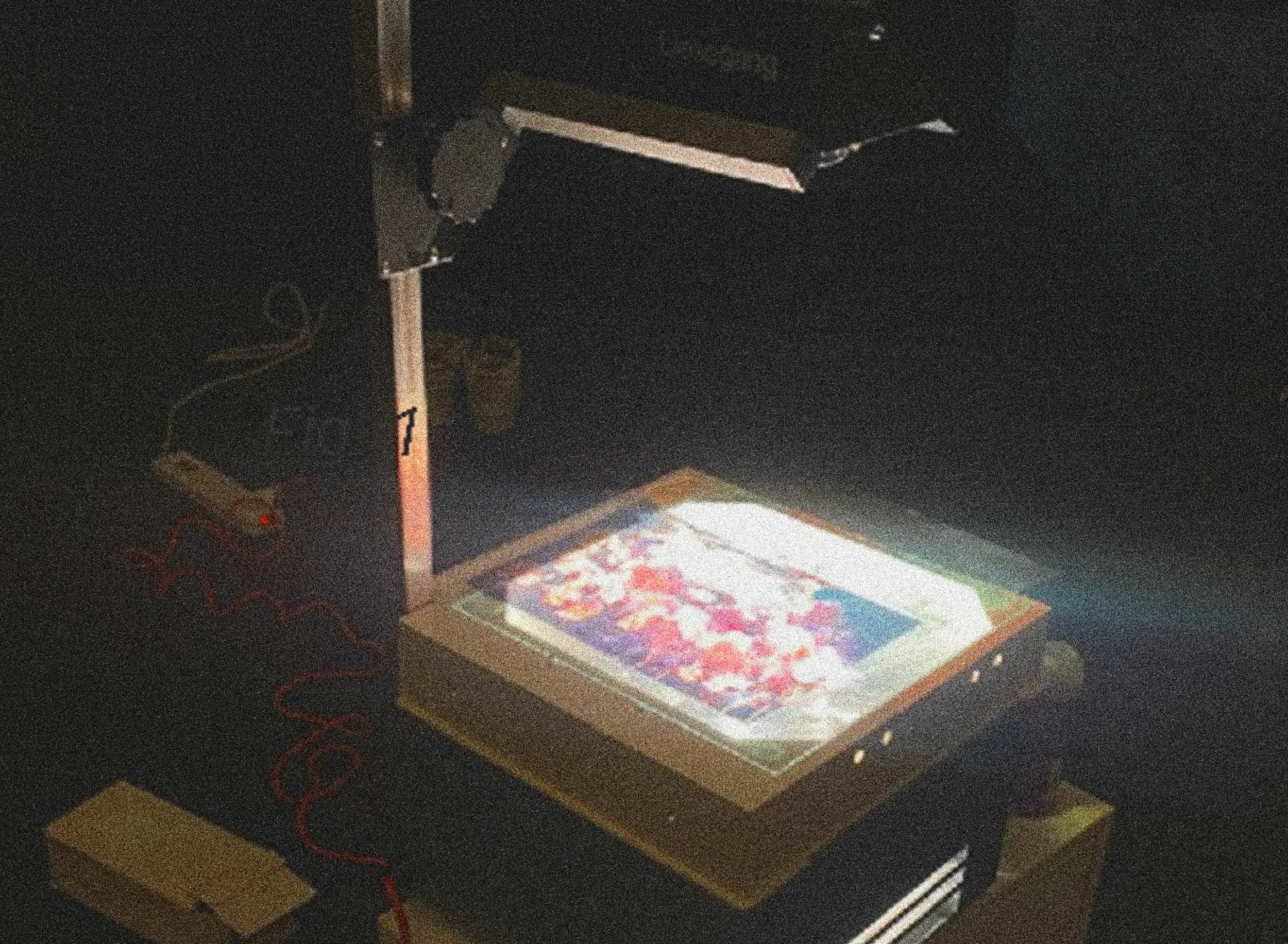
Stuart Lee, Fig 3. Still of “The Felled Tree Performance” (Multi Media Performance). 2025.
This very binary way of looking at what is a joyous planetary/corporeal experience for most — and by ‘most’, I mean us in the queer community — was amorphously jellified in Jannis Neumann’s performance of Grasping the Liquid during a reenactment of his Radical Matter contribution at the Royal College of Art, London.Feminist anthropologists add important depth to this vision. Michelle Rosaldo argued that the domestic sphere is where a society’s deepest values are internalized. Sherry Ortner’s work revealed how the so called “private” sphere is not intellectually passive but a place where meaning is reproduced, contested, and transmitted. Their insights help reposition the home as a site of sophisticated knowledge rather than a space of mere sentiment or routine.
This review sits alongside and within my current thesis, Emergent-cy: Reconfigurings Towards Ongoing Crises. Emergent-cy is a neologism I have developed to rethink the grammar of crisis. If “emergent”, as an adjective, is always subordinate, modifying something else and implying temporariness, Emergent-cy as an abstract noun repositions crisis as the subject itself. Emergent-cy precisely aims to further undo that which Naumann performs so deftly with jelly and projection. Where Ganna’s scientific paper reduces queerness to calculable factors, Neumann enacts resistance through performative gestures which liquefy and blur.
Jelly smeared acetates that cover pictures of anatomical studies rupture the fixed knowledge systems they represent.
Unlike temples, monasteries, state offices, and other institutions historically dominated by men, the Bhutanese home has long been a centre of women’s authority. Hearths, grain stores, family shrines, and multigenerational rooms are domains through which women maintain memory, tend to rituals, preserve seeds, manage food systems, and cultivate the emotional environment in which children learn who they are. This aligns with feminist theorists such as Donna Haraway and Sara Ahmed, who argue that knowledge is always embodied and situated, emerging not from abstraction but from lived experience. The performance’s use of overhead projectors (Fig. 3) summons memories of scholastic days past. Yet Naumann has subverted these tools, turning them into an object of dissent.
We Are All in This Together, Film, 2022. 1920 x 1080 Duration: 2:15sec.
Metaphors of overlay and leakage emerge.
The image of the upturned sofa laid bare, the lightbox glowing accidentally, offers additional ruptures to containment. Naumann, at no point, attempts a resolution, and neither does Emergent-cy. The performance, read against the queered terrains outlined in Naumann’s reading, seeks to embrace latency and flux.
Emergent-cy insists on this same suspension. Furthering Naumann’s rupture and drawing from Gilbert Simondon’s ontogenesis, it frames crisis not as a breakdown but as a forming terrain. The performance becomes a counter in Naumann’s murmured script and jellified gestures. Queer theory, when aligned with Emergent-cy, functions not as a lens but as a pulse: equally resisting the teleological and embracing provisionality. This refusal to resolve finds further articulation in my practice The Felled Tree Performance (2025).
Written By Stuart Lee.
Footnote:
Stuart Lee is a London-based artist-researcher using they/them pronouns. Their public biography describes them as self-taught, with a BFA from London Metropolitan University, an MA in Contemporary Art Practice from the Royal College of Art, subsequent MRes study, and current doctoral research within the RCA School of Arts & Humanities Doctoral Training Programme. Their practice moves through queer epistemology, ecological crisis, object relations, posthuman thought, projection, performance, sculpture, film, and materially unstable forms of knowledge production. RCA’s 2023 profile situates Lee’s work through thinkers including Rosi Braidotti, Hito Steyerl, Bernard Stiegler, Karen Barad, and Josephine Berry, with works such as We Are All in This Together and Four Summers in One Day addressing Anthropocene anxiety, platform capitalism, extraction, technological mediation, and posthuman indeterminacy. Their project Queered Terrains explicitly frames projection, ecological terrain, depth perception, and “queered cosmology” as methods for undoing binary and Cartesian modes of perception.