
Virginia Damtsa: It takes a Village to Build An artist’s Career
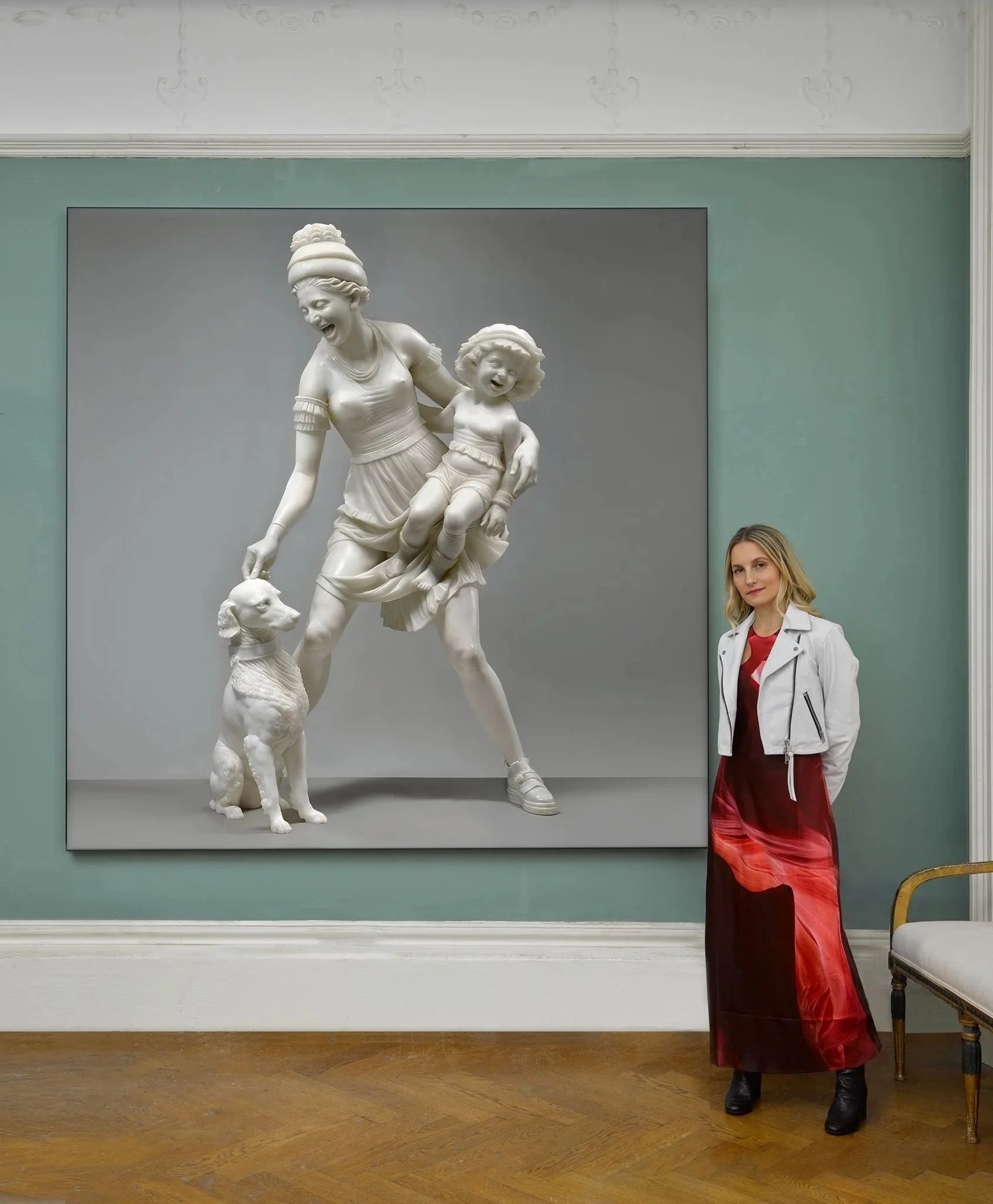
Virginia Damtsa with Von Wolfe painting
Laura Dzelzytė in conversation with Virginia Damtsa
Several London galleries and institutions were at the forefront of performance art, particularly from the 1970s onwards, often serving as spaces for challenging the boundaries between art and life. Alongside Whitechapel and Serpentine, there was Riflemaker in Soho. Opened in 2003 by Virginia Damtsa and Tod Taylor, it was specifically dedicated to exploring feminist, sound, and performance art, hosting regular live performances, including some groundbreaking, intimate shows such as Bagism by Yoko Ono.
After two decades of running her own gallery and shaping careers from early stages to international recognition, Virginia shifted towards artist development, curatorial work, and leadership roles in the visual arts. She now leads VirginiaVisualArts, a hybrid gallery and strategic art platform. We meet to talk about where and how power sits within the larger structures of the arts.
Where is the power now: institution, individual, or artist?
Power today is fluid. It moves between institutions, individuals, and artists rather than residing in one place. Institutions still provide structure and visibility, but artists and individuals have far greater agency than before. What matters now is not where power sits, but how effectively one can navigate between these spheres and create meaningful connections within them.
You’ve negotiated and facilitated major moments involving artists such as Judy Chicago, Antony Gormley, and Yoko Ono. Why did you choose to shift your work outside the traditional gallery system?
Running a gallery off Regent Street in London for more than two decades gave me a grounded understanding of the ecosystem, including its pressures, rhythms, and opportunities. I have also had the privilege of working with remarkable artists, from Martin Kippenberger to Judy Chicago, Gavin Turk, Annette Messager, and Peter Gabriel.
I do not conform to traditional models, which allows me to step back and see the larger structure and how institutions, markets, and cultural policies intersect. I operate more fluidly between these spheres. I am less interested in fixed titles and more focused on where I can have the most meaningful impact, whether that is advising an artist, shaping a programme, or guiding a broader strategic vision.
Does it feel too crowded? How do emerging artists cut through the noise?
Anything truly good is always crowded, especially at the top level. For artists, the challenge is multifaceted. They must excel in technique, develop a distinct visual language, articulate strong ideas, and cultivate a clear identity, while also navigating marketing and visibility.
It is a demanding balance, which is why building a strong, supportive network is essential. The right guidance, collaborations, and strategic relationships can make all the difference. It really does take a village to build a career.
As art schools accept more mature students and more people turn to art as a second career, do you believe in the “mature emerging artist,” or does a cult of youth still dominate?
I do not agree with the idea that youth dominates. In fact, there is a strong and growing demand for mature artists, particularly women. Many galleries actively ask me to recommend established female artists, and I have worked with several, including Judy Chicago, Penny Slinger, Liliane Lijn, and Yoko Ono. At the moment, we are in demand. I hope it lasts. It is our duty to ensure that it does. I am passionate about supporting artists.
You worked with Yoko Ono, creating moments that cannot easily be institutionalised yet are deeply influential. Is performance art finally getting recognition?
Working with Yoko Ono was a defining experience because it challenged any lingering notion of art as something fixed or contained. Performance exists in time. It is about presence, participation, and often vulnerability.
As a professional dancer in my early years, I believe art is not only something to be collected or exhibited, but something to be lived and activated. I have a sensitivity to the ephemeral, to works and moments that resist institutionalisation yet leave a lasting impact.
I am particularly interested in operating in that in between space, where one can engage with the market while still remaining experimental and open to risk.
Athens or London?
I love both. London for its multicultural energy and extraordinary cultural infrastructure. Athens for its history and the constant sense that inspiration is embedded in every corner.
Where is the best coffee in town?
I am actually not much of a coffee person. I tend to have too much natural energy and lean more towards chamomile. That said, Hagen does a very good decaf.